
Antiviral activity and chemical characterization of Egyptian Ziziphus spina-christi against human respiratory viruses
Antiviral Activity and Chemical Characterization of Egyptian Ziziphus spina-christi Against Human Respiratory Viruses
Introduction
Acute respiratory infections are among the most common ailments affecting humans, often escalating into severe respiratory tract infections that pose a significant threat to public health. With the rise of viral outbreaks in recent years, including influenza, Middle East respiratory syndrome (MERS), and COVID-19, the quest for effective antiviral treatments has never been more urgent. Researchers are increasingly turning to natural sources for potential remedies. One such candidate is Ziziphus spina-christi (L.), a plant that has a long history of medicinal use in the Middle East. This article explores the antiviral properties of Z. spina-christi against key respiratory viruses, shedding light on its potential as a natural therapeutic agent.
The Promise of Ziziphus spina-christi
Ziziphus spina-christi, commonly known as Christ’s thorn jujube or sidr, is a plant renowned for its wide-ranging health benefits. Historically, it has been employed for its anti-inflammatory, anti-fungal, anti-microbial, and anti-viral properties. Recent studies have sought to scientifically validate these traditional uses, particularly focusing on its antiviral capabilities against significant respiratory viruses: influenza virus H1N1, MERS-CoV, and SARS-CoV-2.
In a groundbreaking study, researchers investigated the antiviral effects of the leaves and fruits of Z. spina-christi. Using crude methanol extracts, they fractionated the extracts into n-hexane, dichloromethane, and ethyl acetate, alongside aqueous residues. They then conducted chemical profiling through LC-ESI-MS/MS analysis to identify the bioactive compounds responsible for the observed antiviral activities.
Findings on Antiviral Efficacy
The study revealed a rich composition of phytochemicals in both the leaf and fruit extracts of Z. spina-christi. Prominent compounds identified include flavonoids, phenolic acids, saponins, sterols, and triterpenes. Notably, caffeic acid emerged as the most common phenolic compound across all samples. Among the flavonoids, quercetin, luteolin, and taxifolin were particularly abundant in the ethyl acetate fraction of the fruits. Saponin compounds such as lotoside II, Ziziphus saponin I, and betulinic acid were also prevalent, suggesting a diverse range of bioactive constituents with potential therapeutic effects.
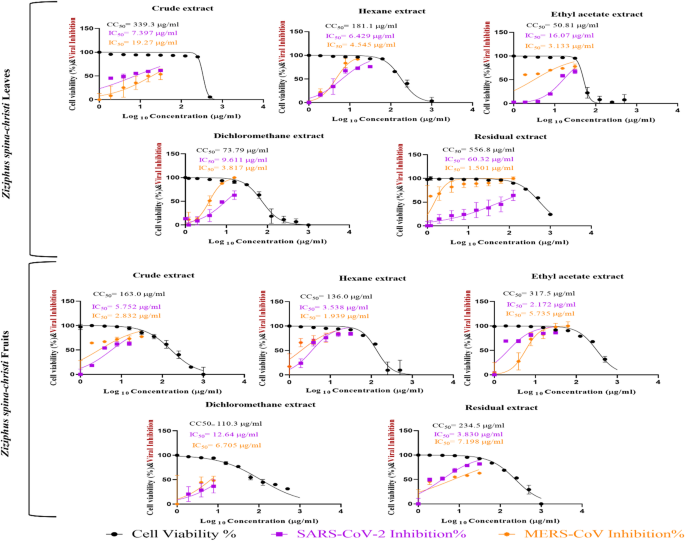
The antiviral activity was quantitatively assessed using IC50 values, which indicate the concentration required to inhibit viral replication by 50%. The crude extract from the leaves exhibited remarkable antiviral effects against H1N1, with an IC50 of 1.240 µg/ml, and against SARS-CoV-2, with an IC50 of 7.397 µg/ml. Additionally, the residual extract demonstrated efficacy against MERS-CoV with an IC50 of 1.501 µg/ml. These findings underscore the potential of Z. spina-christi as a powerful natural antiviral agent.
Mechanism of Action
To further elucidate the mechanism of action, researchers employed in-silico molecular docking techniques to analyze how the identified phytocompounds interact with viral proteins. The binding energies were calculated to assess the strength of these interactions. For H1N1, the binding energy with hemagglutinin (HA) was found to be −7.48 kcal/mol, indicating a strong affinity that could hinder viral entry. Similarly, for SARS-CoV-2, the binding energy with the spike protein was −10.18 kcal/mol, suggesting a potentially potent mechanism of action. For MERS-CoV, the binding energy with the spike protein was −8.19 kcal/mol, further supporting the antiviral potential of Z. spina-christi.
Conclusion
The findings from this study illuminate the promising antiviral properties of Ziziphus spina-christi against significant respiratory viruses, including H1N1, MERS-CoV, and SARS-CoV-2. With its rich composition of bioactive compounds and demonstrated efficacy, Z. spina-christi presents a viable option for the development of natural antiviral medications. As researchers continue to explore the therapeutic potential of this ancient plant, the hope is that it may play a crucial role in addressing the ongoing public health challenges posed by respiratory viruses. Future studies and clinical trials will be essential to validate these findings and further understand the mechanisms through which Z. spina-christi exerts its antiviral effects, paving the way for innovative treatments grounded in nature.