
Extinct ocean, not just India, shaped Central Asia long before the Himalayas
# The Ancient Tethys Ocean: A Hidden Force in Central Asia's Geological History
## Introduction: Unveiling the Secrets of Central Asia's Landscape
For centuries, scientists have explored the geological history of Central Asia, attempting to piece together how its rugged terrain came to be. Traditionally, the prevailing theory attributed the dramatic rise of the Himalayas and the surrounding mountains to the collision between the Indian subcontinent and the Eurasian plate. However, recent research has unveiled a surprising twist in this narrative. It turns out that the ancient Tethys Ocean, which no longer exists, played a crucial role in shaping the mountains of Central Asia long before the Himalayas emerged. This groundbreaking discovery not only challenges established geological theories but also sheds new light on the intricate processes that have sculpted our planet's landscapes.
## The Tethys Ocean: A Brief Overview
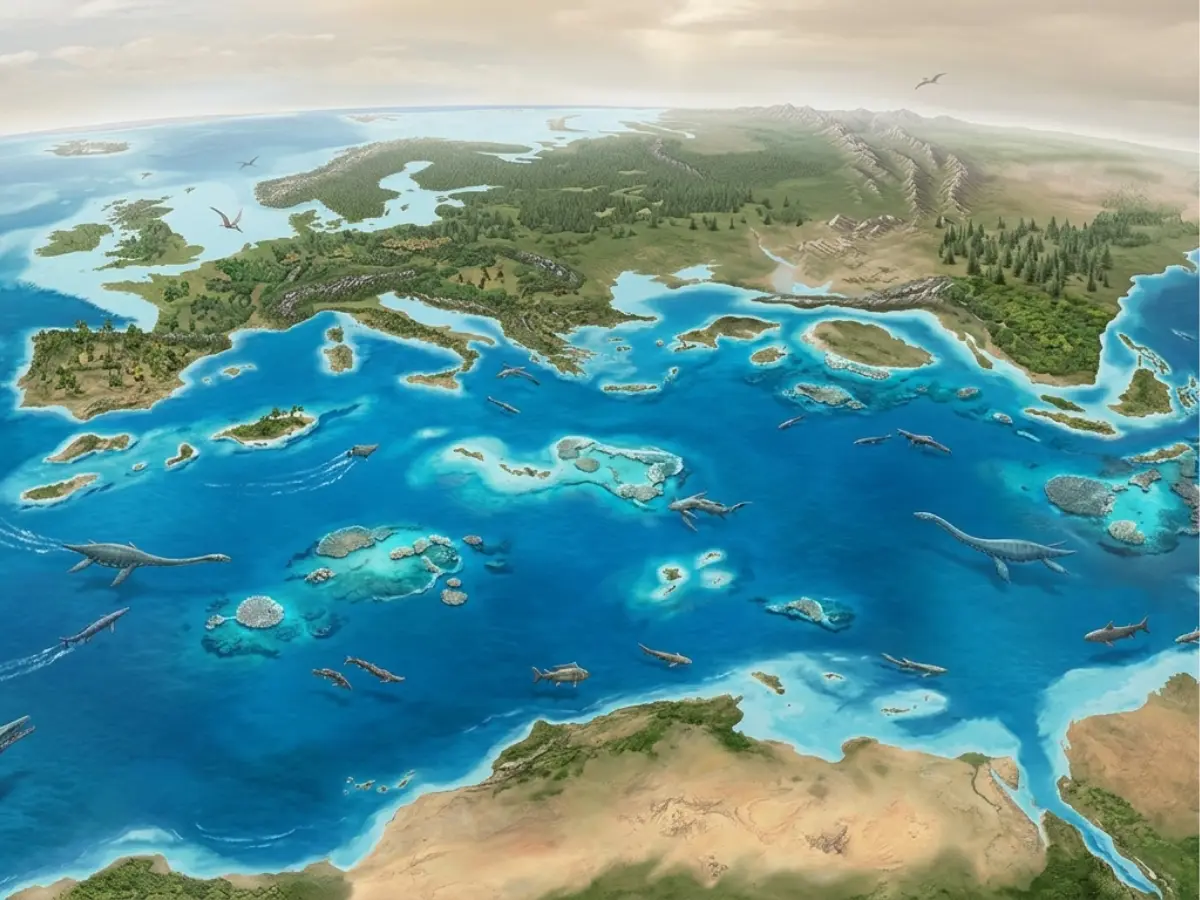
The Tethys Ocean was an ancient ocean that existed during the Mesozoic Era, roughly between 250 and 66 million years ago. It was situated between the continents of Gondwana and Laurasia and was a significant body of water during the age of the dinosaurs. As tectonic plates shifted and collided, the Tethys Ocean gradually closed, leading to the formation of mountain ranges like the Alps and the Himalayas. However, its influence did not cease with its disappearance; rather, it left an indelible mark on the geological features of Central Asia.
## A New Perspective on Mountain Formation
The recent findings regarding the Tethys Ocean have prompted a re-evaluation of the geological processes that shaped Central Asia. Researchers from leading universities and geological institutions have conducted extensive studies, employing advanced geological modeling and analysis of rock samples from the region. Their findings suggest that the remnants of the Tethys Ocean have had a lasting impact on the lithosphere of Central Asia, influencing the formation of mountain ranges and valleys.
The Role of Tectonic Activity
Geologists have long understood that tectonic activity is a primary driver of mountain formation. The collision of tectonic plates creates immense pressure, leading to the uplift of land. However, the recent research indicates that the tectonic activities associated with the Tethys Ocean were more influential than previously thought. The ocean's closure and subsequent subduction of its tectonic plates contributed to the geological stresses that shaped the region's mountains.
Evidence from Rock Samples
To support their claims, researchers analyzed rock samples from various locations in Central Asia. They discovered unique mineral compositions and structural features in the rocks that can be traced back to the influence of the Tethys Ocean. These findings indicate that the geological history of the region is far more complex than a straightforward narrative of continental collision.
## Implications for Geological Science
The implications of this discovery are vast and could reshape our understanding of geological processes not just in Central Asia, but globally. The findings suggest that oceans, even those that have long since vanished, can have a profound and lasting impact on the geological features of adjacent landmasses. This challenges the notion that only current tectonic processes should be considered when studying mountain formation.
Revisiting Geological Models
As researchers continue to examine the role of the Tethys Ocean in shaping Central Asia, geological models will need to be revisited. Traditional models that focus solely on the India-Eurasia collision may not adequately account for the influences of ancient oceanic bodies. This necessitates a more nuanced approach to understanding how various geological forces interact over millions of years.
## Broader Geological Context
To truly appreciate the significance of the Tethys Ocean's impact on Central Asia, it is essential to consider its role within the broader context of Earth's geological history. The closure of the Tethys Ocean was not an isolated event; it was part of a larger series of tectonic movements that have shaped the continents as we know them today.
The Connection to Other Mountain Ranges
The Tethys Ocean's influence extended beyond Central Asia. The mountain ranges of the Alps, the Caucasus, and even parts of the Himalayas can trace their geological lineage back to the ancient ocean. By studying the interconnectedness of these regions, geologists can gain a deeper understanding of the Earth's tectonic history and the forces that have shaped it.
The Importance of Interdisciplinary Research
The findings regarding the Tethys Ocean highlight the importance of interdisciplinary research in geology. Collaboration between geologists, paleontologists, and climatologists can lead to more comprehensive insights into how ancient environments influenced the development of modern landscapes. By integrating various fields of study, researchers can unravel the complexities of Earth's geological history.
## Conclusion: A New Chapter in Geological Understanding
The discovery that the ancient Tethys Ocean played a significant role in shaping the mountains of Central Asia is a remarkable advancement in geological science. It challenges the traditional narrative that attributes the region's geological features solely to the collision of the Indian and Eurasian plates. As scientists continue to explore this ocean's legacy, we can expect to see a shift in how we understand mountain formation and tectonic processes.
This newfound perspective not only enriches our knowledge of Central Asia but also encourages a more holistic view of Earth's geological history. The Tethys Ocean's influence serves as a reminder that the forces shaping our planet are often interconnected and complex. As research in this field advances, we may uncover even more hidden chapters in the story of Earth's dynamic past, ultimately leading to a deeper appreciation of the geological wonders that surround us.