
Glow hard: Donald Trump's nuclear threat grows darker in face of Iranian defiance
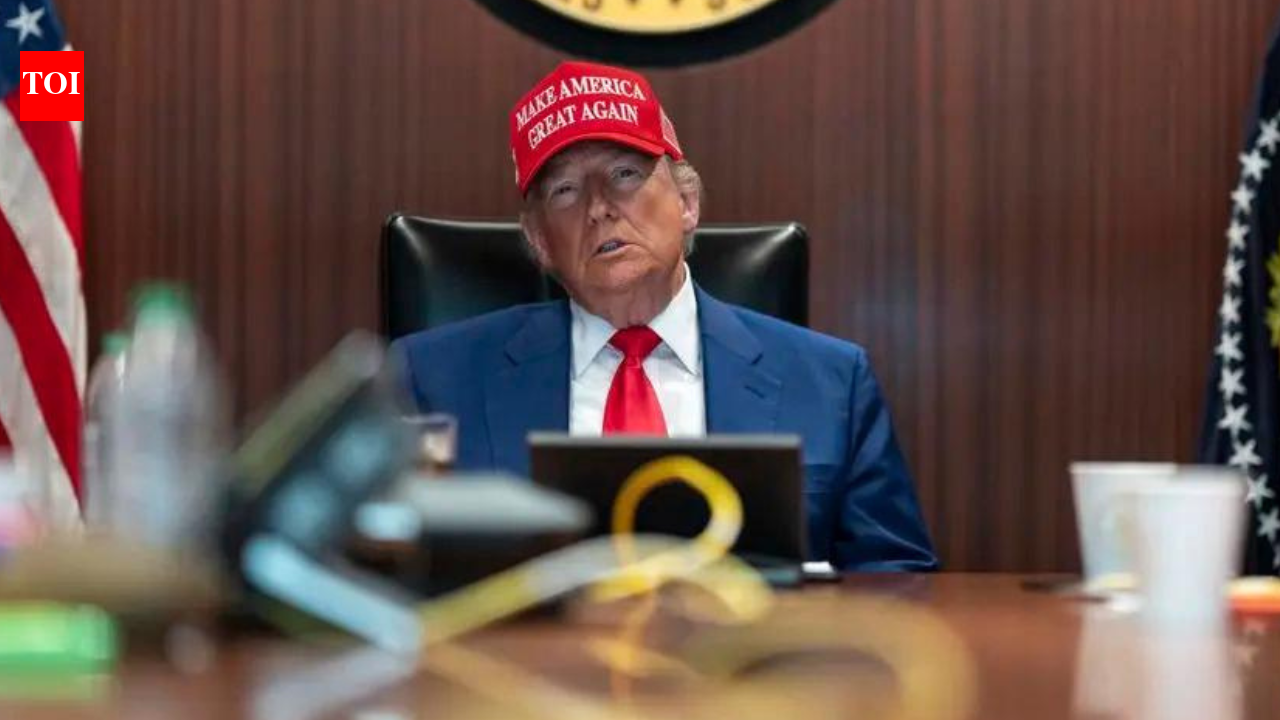
# Donald Trump's Nuclear Threat Escalates Amid Iranian Defiance
Introduction
In a climate of escalating tensions, President Donald Trump has exhibited a fluctuating stance toward Iran, oscillating between aggressive posturing and surprising diplomatic overtures. The ongoing friction has not only heightened fears of conflict but has also raised alarms about the potential ramifications of nuclear threats from the U.S. as Iran continues to challenge American authority in the region. As the situation develops, it becomes crucial to analyze the implications of both nations' actions and the potential pathways for resolution or further escalation.
## A Tumultuous Relationship
The United States and Iran have a long history of animosity, rooted in the 1979 Islamic Revolution and subsequent events that have shaped their relationship. Over the years, this rivalry has manifested in various forms, from economic sanctions to military confrontations. With Trump's presidency, this dynamic has intensified, particularly following the U.S. withdrawal from the Joint Comprehensive Plan of Action (JCPOA) in 2018, a move that reestablished harsh sanctions against Iran and exacerbated tensions.
In recent weeks, the U.S. has adopted a more aggressive military posture in the region, with Trump emphasizing a strategy that combines threats of military action with the potential for diplomatic engagement. This “blow hot-blow cold” approach leaves many analysts questioning the stability of U.S.-Iran relations and what it might mean for global security.
## The Escalation of Military Rhetoric
As both nations continue to exchange barbs, Trump's rhetoric has increasingly taken a darker turn. In a series of statements, he has alluded to the possibility of military action against Iran if its defiance persists. This escalation comes as the Iranian government has demonstrated its own willingness to provoke the U.S. through missile tests and military maneuvers in the region.
Trump's administration has made it clear that it will not tolerate Iranian aggression. The president has issued a series of warnings regarding Iran's nuclear ambitions, claiming that the country is advancing its weapons program at an alarming rate. These threats have resonated throughout the international community, raising concerns over the potential for military confrontation.
## Iran's Defiance and Nuclear Developments
In response to U.S. sanctions and military threats, Iran has ramped up its nuclear program, claiming that it is focused on developing peaceful energy sources. However, the international community remains skeptical, with many fearing that Iran is inching closer to acquiring nuclear weapons capabilities. Reports of uranium enrichment levels exceeding those allowed under the JCPOA have only heightened these fears.
Iran's defiance is not solely rooted in its nuclear ambitions. The Iranian government has also sought to expand its influence throughout the Middle East, supporting proxy militias in countries like Iraq, Syria, and Yemen. This strategy has frustrated U.S. officials, who view Iran's actions as destabilizing and contrary to American interests in the region.
## The Role of International Diplomacy
While the rhetoric between the U.S. and Iran has reached a fever pitch, there have been moments of potential diplomatic engagement. Various European nations have attempted to mediate the conflict, seeking a path back to the negotiating table. These efforts have often been met with mixed reactions from both Washington and Tehran, leading to frustration among European leaders who fear a wider conflict could erupt.
The Biden administration, which succeeded Trump, has indicated a willingness to revisit the JCPOA, but the road to a new agreement is fraught with challenges. Iran's recent actions—combined with ongoing hostilities—have made it difficult for either side to find common ground. As the stakes rise, the prospects for peace appear increasingly tenuous.
## Potential Consequences of Escalation
The ramifications of a military confrontation between the U.S. and Iran could be catastrophic, not only for the two nations but for the entire region and beyond. A conflict could destabilize oil markets, leading to soaring prices that would impact economies worldwide. Moreover, the humanitarian crisis in the region could deepen, with innocent civilians caught in the crossfire.
Additionally, an escalation could invite responses from other global players, including Russia and China, who may see an opportunity to assert their influence in the Middle East. This would further complicate an already delicate geopolitical landscape and could lead to a broader conflict that challenges U.S. dominance in the region.
## The Domestic Political Landscape
Domestically, Trump's approach to Iran has sparked debate among lawmakers and political analysts. Some argue that his aggressive tactics are necessary to deter Iranian aggression, while others believe that such hostility could backfire, leading to unintended consequences. As the 2024 presidential election approaches, foreign policy will likely play a significant role in shaping the electoral landscape, with candidates weighing in on the appropriate strategy for dealing with Iran.
The divide among political leaders reflects the complexity of the issue. While there is bipartisan support for holding Iran accountable for its nuclear ambitions, there is also a growing call for diplomatic solutions that prioritize dialogue over military confrontation.
## Conclusion
As tensions mount between the U.S. and Iran, President Donald Trump's nuclear threats have taken on a more ominous tone, raising concerns about the potential for conflict. With Iran's defiance and aggressive posturing, the stakes are higher than ever. The international community watches closely, hoping for a resolution that prioritizes diplomatic engagement and avoids the catastrophic consequences of war.
The coming months will be crucial in determining the trajectory of U.S.-Iran relations. As both nations stand firm in their positions, the potential for negotiation remains, albeit fraught with challenges. The world can only hope that cooler heads will prevail, paving the way for a more peaceful future in the Middle East.