
Hong Kong’s first astronaut Lai Ka-ying lifts off into space on Shenzhou-23 mission
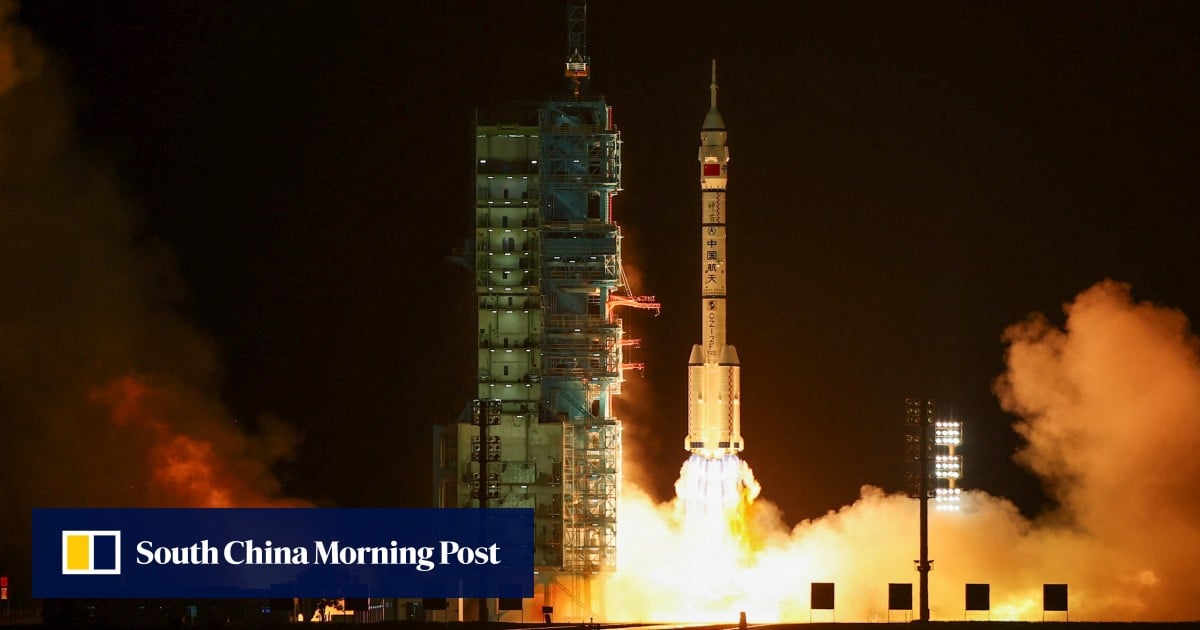
# Hong Kong’s First Astronaut Lai Ka-ying Embarks on Historic Shenzhou-23 Mission
In a groundbreaking moment for Hong Kong and the broader space community, Lai Ka-ying has officially launched into space as part of the Shenzhou-23 mission. As the first astronaut from Hong Kong, Lai's journey marks a significant milestone not only for the region but also for China's expanding space exploration ambitions. This mission highlights the increasing collaboration and contributions of various regions within China to its ambitious space program.
## A New Era for Hong Kong in Space Exploration
Lai Ka-ying's launch aboard the Shenzhou-23 spacecraft is a testament to the rapid advancements in space exploration technology and the commitment of Hong Kong to play a role in this evolving landscape. The mission, which features a three-person crew, is designed to further research and development in space, as well as to conduct scientific experiments that could have lasting benefits for humanity.
Lai, serving as a payload specialist, will be working alongside two seasoned astronauts, each bringing invaluable experience to the mission. The crew will not only explore the scientific possibilities of living and working in space but also demonstrate the potential of Hong Kong's talent in the global arena of space exploration.
## The Shenzhou-23 Mission: Objectives and Goals
The Shenzhou-23 mission aims to achieve several critical objectives during its time in orbit. The primary goals include:
1. **Scientific Research:** The crew will conduct various experiments that focus on the effects of microgravity on biological systems, materials science, and other fields. This research could lead to breakthroughs in healthcare, engineering, and environmental science.
2. **Technology Demonstration:** The mission will serve as a platform for testing new technologies that could be essential for future long-duration space missions, including life-support systems and advanced robotics.
3. **International Collaboration:** As space exploration becomes increasingly globalized, Shenzhou-23 aims to foster international partnerships. The mission will include collaborative experiments with scientists from various countries, showcasing the importance of teamwork in addressing global challenges.
4. **Human Factors Research:** With one crew member slated to spend an entire year in space, the mission will provide crucial data on the psychological and physiological impacts of long-term space travel. This information is vital for planning future missions to Mars and beyond.
## Celebrating Hong Kong's Astronautical Achievement
Lai Ka-ying's ascent into space is not just a personal achievement; it symbolizes the aspirations of many in Hong Kong. The excitement surrounding this mission has rekindled interest in STEM (Science, Technology, Engineering, and Mathematics) fields among students and young professionals in the region. Schools and educational institutions are already reporting an uptick in students expressing interest in pursuing careers related to space and technology.
The Hong Kong government has also expressed its support for space exploration initiatives. By investing in research and technology, the city aims to build a robust aerospace sector that can contribute to global advancements in space travel and exploration.
## Preparing for Liftoff: Training and Challenges
Lai Ka-ying's journey to becoming Hong Kong's first astronaut began years before his historic launch. The rigorous training process included physical conditioning, technical skills development, and simulations of space missions. Lai underwent extensive training to prepare for the unique challenges of living and working in space, from mastering spacecraft systems to conducting scientific experiments in microgravity.
The journey wasn’t without its challenges. Lai faced numerous obstacles, including the physical demands of training and the intense psychological preparation needed to adjust to life in a confined space for extended periods. However, his dedication and resilience have made him an inspiring figure for aspiring scientists and explorers in Hong Kong.
## The Impact of Space Exploration on Society
Space exploration has far-reaching implications that extend beyond the scientific community. Lai Ka-ying's mission represents a convergence of technology, education, and international cooperation. The advancements made in space can lead to innovations that benefit everyday life on Earth, from improvements in telecommunications to advancements in climate monitoring.
Moreover, the Shenzhou-23 mission serves as a reminder of the importance of investing in scientific research and education. As the world grapples with pressing issues such as climate change, public health, and food security, the insights gained from space exploration can provide valuable solutions.
## Looking Toward the Future: The Next Steps in Space Exploration
As Lai Ka-ying and his crew embark on their mission, the future of space exploration appears brighter than ever. The Shenzhou-23 mission is not merely an endpoint but a stepping stone toward more ambitious projects, including crewed missions to the Moon and Mars. China's space program has set its sights on achieving significant milestones, such as establishing a permanent lunar base and sending humans to Mars in the coming decades.
In addition to these goals, international collaboration will play a crucial role in the future of space exploration. As nations come together to share knowledge and resources, the potential for groundbreaking discoveries will expand, benefitting all of humanity.
## Conclusion: A Milestone for Hong Kong and Beyond
Lai Ka-ying's successful launch into space represents a defining moment for Hong Kong and a significant achievement in the realm of space exploration. As the first astronaut from the region, Lai not only embodies the aspirations of many but also inspires future generations to pursue careers in science and technology.
Through the Shenzhou-23 mission, Hong Kong is poised to make meaningful contributions to the global space community. As we look toward the future, the importance of collaboration, innovation, and education will be paramount in addressing the challenges and opportunities that lie ahead in the exploration of space. With each mission, we take one step closer to unlocking the mysteries of the universe and ensuring a better future for all of humanity.