
James Webb Telescope reveals barren rocky exoplanet beyond solar system
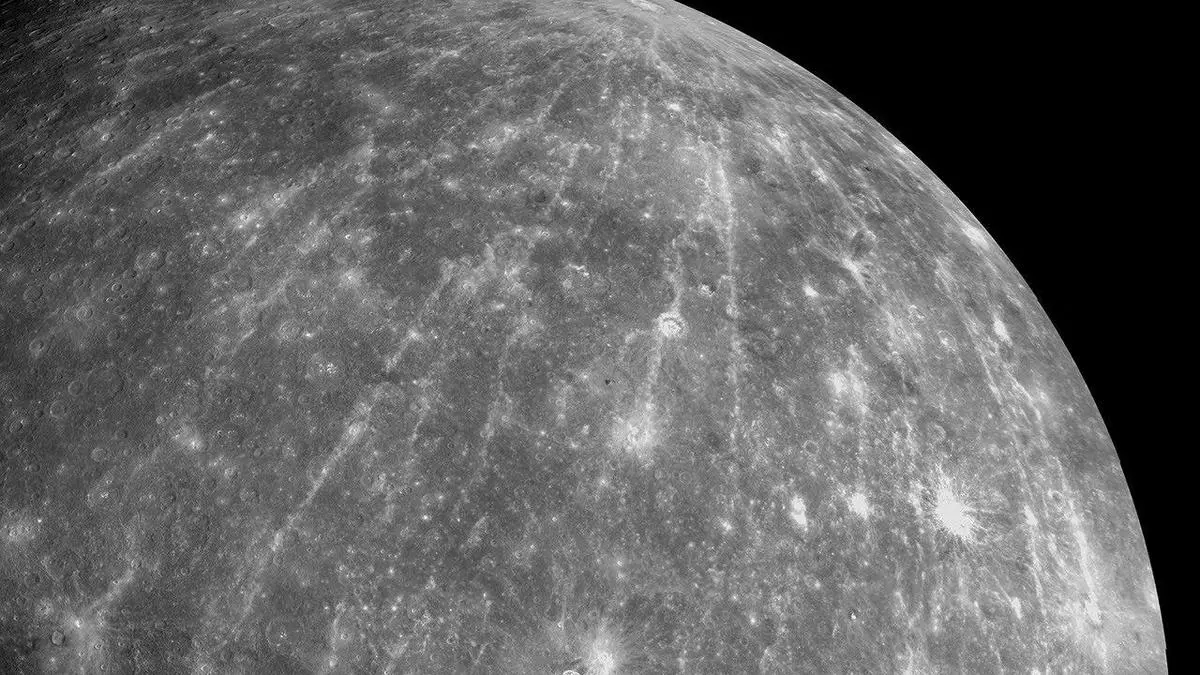
# James Webb Telescope Unveils Barren Rocky Exoplanet Beyond Our Solar System
In an extraordinary leap for astronomy, NASA's James Webb Space Telescope (JWST) has provided scientists with unprecedented insights into a rocky exoplanet located outside our solar system. This groundbreaking discovery offers a clearer view of a world that starkly contrasts with our own Earth, revealing a barren, airless environment that raises questions about the potential for life beyond our planet. As we delve into the details of this remarkable finding, we will explore the implications it has for our understanding of planetary systems and the search for extraterrestrial life.
## The James Webb Space Telescope: A New Era in Astronomy
Launched on December 25, 2021, the James Webb Space Telescope represents a significant advancement in space observation technology. Designed to seek out the secrets of the universe, JWST operates primarily in the infrared spectrum, allowing it to peer through cosmic dust and gas clouds that often obscure our view of distant celestial objects. With its powerful instruments, the telescope can analyze the atmospheres of exoplanets, study the formation of stars, and explore the origins of galaxies, making it a vital tool for modern astronomy.
## A Closer Look at the Rocky Exoplanet
The exoplanet observed by JWST, located in a distant star system, is categorized as a rocky world. While it shares some characteristics with Earth, its conditions are drastically different. The data gathered by the telescope reveals that this exoplanet is characterized by extreme temperatures and lacks a substantial atmosphere. The harsh environment raises significant questions about the potential for habitability and the geological processes that could shape such a world.
The Scorching Surface: Temperature Extremes
JWST’s observations indicate that the surface temperature of this barren exoplanet is extraordinarily high, likely exceeding 1,000 degrees Celsius (1,832 degrees Fahrenheit). Such extreme heat is primarily due to its proximity to its host star, which subjects the planet to intense solar radiation. As a result, the surface is thought to be a desolate landscape, potentially covered in molten rock or barren terrain.
Airless and Uninviting: The Lack of Atmosphere
One of the most striking revelations from the JWST's data is the absence of a substantial atmosphere surrounding the exoplanet. Unlike Earth, which is enveloped in a protective layer of gases that sustain life, this rocky world seems to lack the essential components for an atmosphere, such as water vapor or carbon dioxide. The absence of an atmosphere not only contributes to the planet's extreme temperatures but also makes it an inhospitable environment for life as we know it.
## Implications for the Search for Life
The discovery of this barren rocky exoplanet presents a fascinating paradox in the ongoing search for extraterrestrial life. While this particular world is inhospitable, it serves as a valuable case study for scientists aiming to understand the diverse conditions that exist throughout the universe.
Diverse Planetary Environments
The study of rocky exoplanets like this one is crucial for expanding our understanding of the variety of planetary environments that can exist beyond our solar system. By examining the conditions of inhospitable worlds, researchers can refine their models of planetary formation and evolution. This knowledge can help scientists identify other exoplanets that might possess the right conditions for life, even if they are not immediately apparent.
The Importance of Future Research
Although this rocky exoplanet appears barren and unwelcoming, the findings underscore the importance of continued research in exoplanetary science. The JWST is already paving the way for future missions and studies that will further investigate the atmospheres and compositions of other distant worlds. By analyzing a broader range of planets, scientists hope to uncover new details about their structures and the potential for habitability.
## The Role of JWST in Exoplanet Exploration
The James Webb Space Telescope is not only a powerful tool for observing distant celestial bodies but also a catalyst for new discoveries in the field of exoplanet research. Its advanced capabilities allow astronomers to gather data that was previously unattainable, leading to significant advancements in our understanding of the universe.
Spectroscopy: Unlocking Planetary Secrets
One of the key techniques employed by the JWST is spectroscopy, which involves breaking down light from distant objects into its component colors. By analyzing the spectrum of light from an exoplanet, scientists can determine its chemical composition and identify the presence of elements and compounds in its atmosphere. This technique has the potential to reveal critical information about the planet's conditions and whether they are conducive to life.
Collaboration and Community Engagement
The success of the JWST is also attributed to the collaborative efforts of scientists, engineers, and institutions from around the world. The data collected by the telescope is made available to the global research community, fostering collaboration and innovation. This open-access approach allows researchers to analyze the findings and contribute their insights, leading to a deeper collective understanding of exoplanets and the universe.
## Conclusion: A Step Forward in our Cosmic Journey
The revelations brought forth by the James Webb Space Telescope concerning this barren rocky exoplanet mark a significant milestone in our quest to understand the universe. While the planet may lack the conditions necessary for life, its study provides invaluable insights into the diversity of exoplanets and the myriad environments that exist throughout the cosmos.
As we continue to explore the depths of space and expand our knowledge of distant worlds, the JWST will undoubtedly play a crucial role in shaping our understanding of planetary systems and the potential for life beyond Earth. This discovery serves as a reminder of the vastness of the universe and the mysteries that await us as we strive to uncover the secrets of the cosmos. The journey is just beginning, and with each new finding, we inch closer to answering one of humanity's oldest questions: Are we alone in the universe?