
JWST maps the universe’s vast cosmic web in unprecedented detail
# JWST Unveils the Cosmic Web: A Groundbreaking Mapping of the Universe
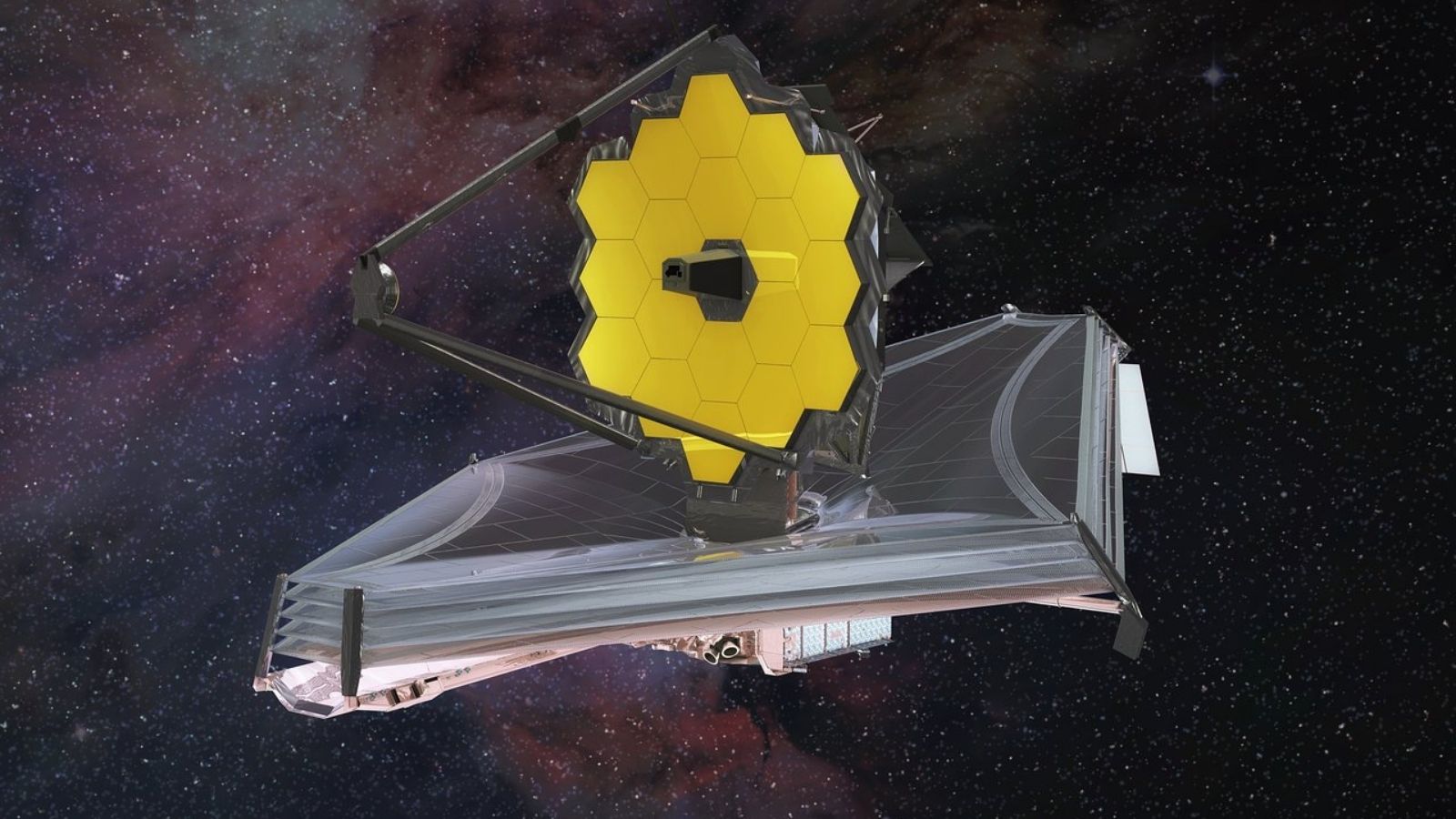
The universe is an intricate tapestry woven from the threads of time and space, and for the first time, scientists have begun to unveil its vast cosmic web in stunning detail. The James Webb Space Telescope (JWST), the most advanced space observatory ever built, has embarked on an extraordinary mission known as the COSMOS-Web survey. This ambitious project has allowed astronomers to map galaxies across nearly 14 billion years of cosmic history, providing unprecedented insights into the formation and evolution of the universe.
## The COSMOS-Web Survey: An Overview
Launched in December 2021, the JWST has already made headlines for its groundbreaking observations of distant galaxies, stars, and exoplanets. At the heart of its recent achievements is the COSMOS-Web survey, a collaboration of international astronomers aimed at creating the most detailed 3D map of the universe ever constructed. By surveying a vast area of the sky—approximately the size of a grain of sand held at arm's length—the JWST has captured light from galaxies that formed just a few hundred million years after the Big Bang.
What is the Cosmic Web?
The cosmic web is the large-scale structure of the universe, consisting of vast filaments of dark matter and gas that connect clusters of galaxies. It is a complex network that shapes the universe's evolution and influences the formation of galaxies. The web comprises three main components: galaxy clusters, filaments, and voids. Galaxy clusters are densely packed groups of galaxies, while filaments are the threads that connect these clusters. Voids are the empty spaces in between, where very few galaxies are found.
Mapping the Universe's History
The COSMOS-Web survey is not merely a collection of images; it is a comprehensive study of the universe's history. The survey employs advanced techniques to analyze the light from galaxies across different epochs, allowing researchers to understand how galaxies evolved over billions of years. By measuring the redshift of galaxies—an indicator of how fast they are moving away from us—astronomers can determine their distance and age. The JWST's powerful infrared capabilities enable it to detect light that has traveled for nearly 14 billion years, revealing a timeline of cosmic history previously obscured by the limitations of earlier telescopes.
## Unprecedented Detail and Clarity
One of the most remarkable aspects of the COSMOS-Web survey is the level of detail achieved in mapping the cosmic web. The survey has yielded over 1.5 million galaxies, significantly expanding our understanding of the universe's structure. The JWST's advanced technology allows it to capture faint light from distant galaxies, revealing their compositions, ages, and distances with unprecedented clarity. This high-resolution mapping provides a more accurate picture of how galaxies cluster and interact over time, shedding light on the processes that govern cosmic evolution.
New Discoveries and Insights
With the COSMOS-Web survey, astronomers have made several groundbreaking discoveries that challenge previous assumptions about the universe. For instance, the survey has identified numerous early galaxies that formed much earlier than once thought, suggesting that the universe’s evolution may have been more rapid than previously believed. Additionally, researchers have observed that galaxies are not uniformly distributed; rather, they are concentrated along the filaments of the cosmic web, confirming the long-held hypothesis about the universe's large-scale structure.
The Role of Dark Matter and Dark Energy
One of the most significant implications of the COSMOS-Web survey is its potential to enhance our understanding of dark matter and dark energy. These mysterious components make up about 95% of the universe, yet their nature remains largely unknown. By examining how galaxies are distributed across the cosmic web, scientists can infer the influence of dark matter and dark energy on the universe's expansion and structure. This research could provide critical insights into fundamental questions about the universe and its fate.
## The Future of Cosmic Exploration
The success of the COSMOS-Web survey marks just the beginning of a new era in cosmic exploration. As the JWST continues to gather data, astronomers will refine their understanding of the universe's evolution and the processes that drive it. Future studies will build upon the findings of the COSMOS-Web survey, delving deeper into the nature of galaxies, dark matter, and dark energy. The potential for new discoveries is vast, and the JWST is poised to remain at the forefront of astronomical research for years to come.
Collaborative Efforts and Global Impact
The COSMOS-Web survey is a testament to the power of international collaboration in scientific research. With contributions from astronomers worldwide, the project exemplifies how pooling resources and expertise can lead to significant advancements in our understanding of the universe. The findings from this survey have far-reaching implications, not only for astrophysics but also for related fields such as cosmology and fundamental physics.
## Conclusion: A New Chapter in Understanding Our Universe
The JWST's COSMOS-Web survey has opened a new chapter in our understanding of the universe, providing an unprecedented glimpse into the vast cosmic web that shapes our reality. With its detailed mapping of galaxies across nearly 14 billion years of cosmic history, the survey is redefining our perspective on the evolution of the universe. As astronomers continue to analyze the data and uncover new insights, we stand on the brink of revolutionary discoveries that could reshape our understanding of the cosmos. The future holds immense promise as we venture deeper into the mysteries of the universe, guided by the brilliance of the James Webb Space Telescope.
In this ever-expanding journey of cosmic discovery, the JWST is not just observing the universe; it is helping us rewrite the story of our origins and the intricate web that connects us all.