
Massive black holes in the first billion years with JWST
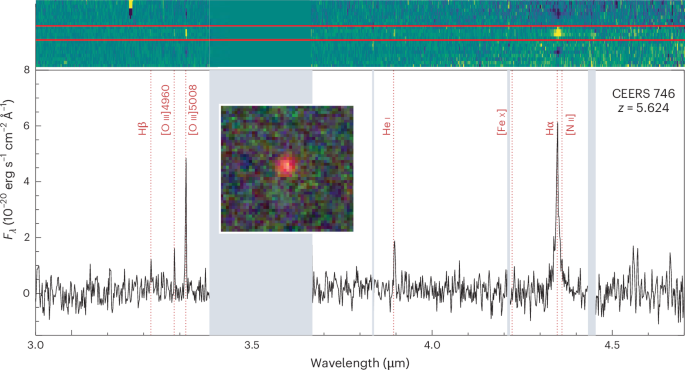
The James Webb Space Telescope has unlocked uncharted territory for the study of early black holes, enabling the detection of fainter and smaller black holes at larger cosmological distances than previously possible. Compared with nearby massive black holes, they are characterized by several unexpected attributes, such as their multiwavelength properties or their relation to their host galaxies. These observational findings challenge our understanding of the past evolution of present-day supermassive black holes, and provide anchor points to constrain theoretical models of black hole formation and growth. This Review summarizes our current understanding of the observed properties of recently discovered, active black holes in the early Universe, and discusses the status of mass measurements and the relation to their hosts, as well as open questions and future prospects. JWST is revealing distant, faint black holes in the early Universe with surprising properties and host-galaxy relationships. These discoveries challenge existing models of supermassive black hole growth and highlight key questions for future research.