
NASA Observes Rare Sungrazer Comet Disintegration Near the Sun
NASA Observes Rare Sungrazer Comet Disintegration Near the Sun
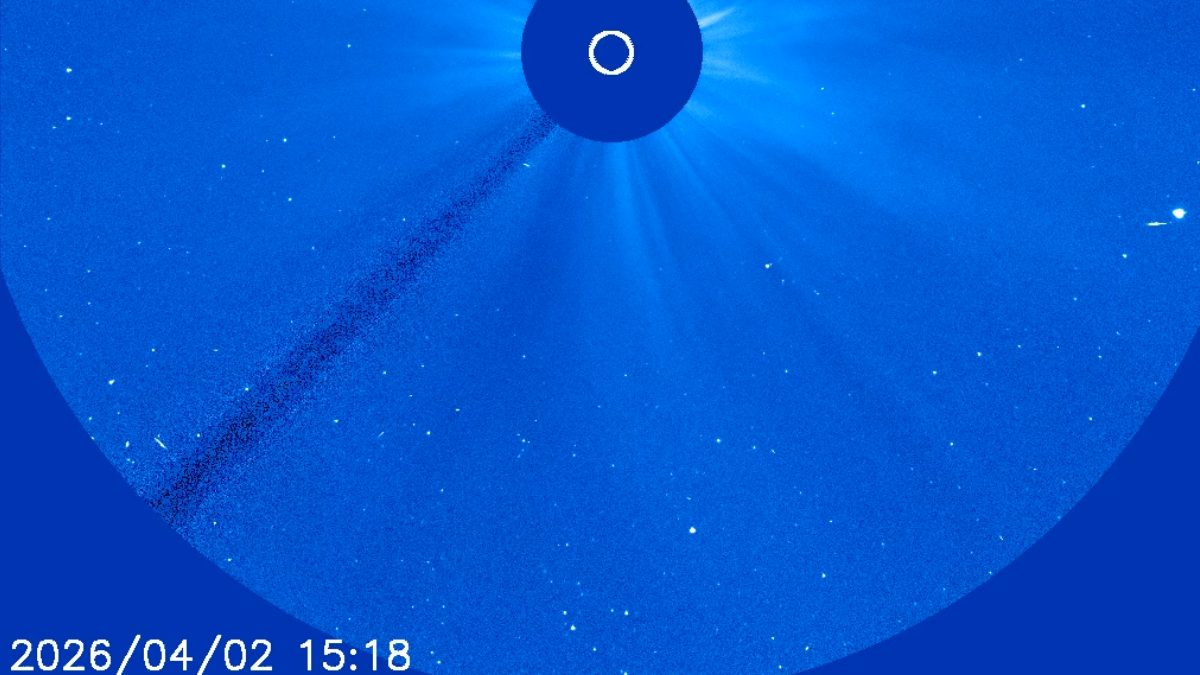
In a remarkable celestial event, NASA has successfully observed the disintegration of the sungrazer comet C/2026 A1 (MAPS) as it approached the Sun. This extraordinary phenomenon, captured by NASA's spacecraft, not only provides a breathtaking view of cosmic activity but also offers valuable insights into the structure of comets and the conditions of the early solar system. The findings are expected to enhance our understanding of these icy bodies and their role in the formation of planetary systems.
The Journey of C/2026 A1 (MAPS)
C/2026 A1 (MAPS), a comet with a long orbital period, was first detected in early 2026. Named for its trajectory that takes it perilously close to the Sun, this comet is classified as a sungrazer. Sungrazers are known for their spectacular approaches to the solar surface, where they can experience extreme temperatures and gravitational forces, leading to their potential disintegration.
NASA's spacecraft, equipped with advanced imaging technology, tracked the comet as it neared the Sun. Observations revealed that as C/2026 A1 (MAPS) entered the Sun's intense heat, it began to break apart, creating a dazzling display of debris. This disintegration process often occurs in sungrazers due to the immense gravitational pull and thermal stress they encounter as they approach our star.
Insights into Comet Structure
The disintegration of C/2026 A1 (MAPS) is a significant opportunity for scientists to study the internal structure of comets. Comets are often composed of ice, dust, and rocky material, and they are considered time capsules from the early solar system. By understanding how these bodies break apart, researchers can glean information about their composition and the conditions that prevailed during the formation of the solar system.
The data collected from NASA's observations will help scientists analyze the materials that make up the comet's nucleus. This could provide clues about the primordial building blocks that contributed to planet formation over 4.5 billion years ago. Furthermore, studying the debris field resulting from the disintegration may reveal the presence of organic compounds and other substances that could shed light on the origins of life on Earth.
The Role of Sungrazers in Solar System Studies
Sungrazers like C/2026 A1 (MAPS) play a crucial role in our understanding of comets and their interactions with the Sun. These comets are often the subject of intense study because they can provide information about the Sun's atmosphere and the solar wind. As sungrazers approach the Sun, they can produce significant outgassing, which contributes to the solar wind and influences space weather patterns.
NASA's observations of C/2026 A1 (MAPS) will also enhance our knowledge of how comets evolve as they pass near the Sun. The changes in a comet's structure and behavior during its approach can reveal important information about the physical processes at work in these icy bodies. Understanding these dynamics is essential for predicting the behavior of other comets that may come close to the Sun in the future.
Implications for Future Research
The disintegration of C/2026 A1 (MAPS) highlights the importance of continuous monitoring and research into celestial phenomena. NASA's commitment to exploring the solar system and beyond enables scientists to collect crucial data that can lead to groundbreaking discoveries. The insights gained from this event will not only enrich our understanding of comets but also inform future missions aimed at studying comets and their potential impact on Earth.
Moreover, as technology continues to advance, the ability to observe and analyze these events in real-time will improve, allowing researchers to gather even more detailed information. Future missions could focus on capturing additional sungrazer comets, giving scientists a broader perspective on these enigmatic objects.
Conclusion
The disintegration of sungrazer comet C/2026 A1 (MAPS) observed by NASA is a captivating reminder of the dynamic nature of our solar system. As researchers sift through the data collected from this event, they will unlock secrets about the composition of comets and the early solar system, enhancing our understanding of the universe. The findings from this observation not only contribute to the field of astronomy but also inspire future exploration and discovery. As we look to the stars, events like these remind us of the mysteries that remain and the continued pursuit of knowledge that drives scientific inquiry.