
NASA powers down Voyager 1 instrument to extend deep space mission
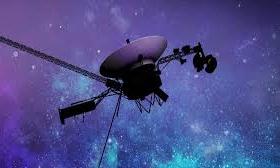
NASA Powers Down Voyager 1 Instrument to Extend Deep Space Mission
In a monumental effort to prolong the legacy of one of humanity's most remarkable space missions, NASA has made the strategic decision to power down one of Voyager 1's scientific instruments. This decision comes as the spacecraft, which has been hurtling through the cosmos for over 46 years, has now traveled more than 15 billion miles from Earth. As it continues its extraordinary journey through interstellar space, this move aims to conserve energy and ensure that Voyager 1 remains operational for as long as possible.
Voyager 1: A Journey Beyond Our Solar System
Launched on September 5, 1977, Voyager 1 was initially designed to conduct close-up studies of Jupiter and Saturn. After successfully completing its primary mission, it continued to send back invaluable data about the outer solar system. In 2012, Voyager 1 made history by becoming the first human-made object to enter interstellar space, a milestone that expanded our understanding of the universe beyond the influence of our sun.
However, Voyager 1 is not powered by traditional fuel sources. Instead, it relies on a radioisotope thermoelectric generator (RTG), which converts heat released by the natural decay of plutonium-238 into electricity. This power source, while remarkably reliable, loses about 4 watts of power each year. Over time, the diminishing power output poses a significant challenge for the mission's continuation.
The Decision to Power Down
NASA's Jet Propulsion Laboratory (JPL) in Pasadena, California, announced the decision to turn off the spacecraft's plasma wave science instrument as a proactive measure to extend its operational life. This instrument has been crucial in studying the plasma waves in the interstellar medium, contributing to our understanding of the environment beyond the solar system. However, with power levels continuously decreasing, the mission team recognized it was time to make some difficult choices.
By shutting down this instrument, NASA aims to conserve energy for other vital systems aboard Voyager 1. The spacecraft is equipped with several scientific instruments, each designed to study different aspects of the cosmos. While it is always challenging to prioritize which instruments to keep active, the decision reflects the agency's commitment to maximizing the mission's duration and scientific return.
The Legacy of Voyager 1
Voyager 1's journey has unlocked a treasure trove of information about our solar system. From its stunning images of Jupiter's Great Red Spot and Saturn's rings to its groundbreaking observations of the heliosphere—the region of space dominated by our sun—Voyager 1 has provided insights that have shaped our understanding of planetary science.
In 1977, as the spacecraft launched, the world was a very different place. The excitement of space exploration captivated the imagination of millions, and Voyager 1 became a symbol of human ingenuity and curiosity. The golden record, a time capsule of Earth's sounds and images included aboard Voyager 1, serves as a message to any intelligent extraterrestrial life that might encounter the spacecraft. This record embodies the hope and aspirations of humanity, transcending the boundaries of time and space.
Challenges Ahead
Despite the successful powering down of the plasma wave science instrument, Voyager 1 faces numerous challenges as it continues its journey through the vastness of interstellar space. The spacecraft is currently experiencing a decrease in temperature and may encounter other technical issues that could impact its ability to communicate with Earth. The mission team remains vigilant, monitoring the spacecraft’s status and making adjustments as needed to ensure its longevity.
As the decades pass, the diminishing power availability will require further adjustments. NASA has laid out a plan to manage the power supply proactively, ensuring that essential systems remain operational. This careful balancing act will be crucial in maintaining communication with Voyager 1 and collecting valuable scientific data for as long as possible.
Conclusion: A Testament to Human Ingenuity
The decision to power down Voyager 1's plasma wave science instrument is a testament to NASA's commitment to extending the mission of this iconic spacecraft. As it sails through interstellar space, Voyager 1 continues to be a beacon of human curiosity and exploration. With each passing year, it reminds us of the vastness of our universe and our unyielding desire to explore the unknown.
As we look to the future, the legacy of Voyager 1 will continue to inspire generations of scientists, engineers, and dreamers. By making strategic decisions to conserve power, NASA is ensuring that this historic mission can continue to provide invaluable insights into the nature of our universe, long after the spacecraft has left the bounds of our solar system. Voyager 1's journey is far from over, and its story continues to unfold, one signal at a time.