
NASA’s new plasma engine could reduce travel time to Mars
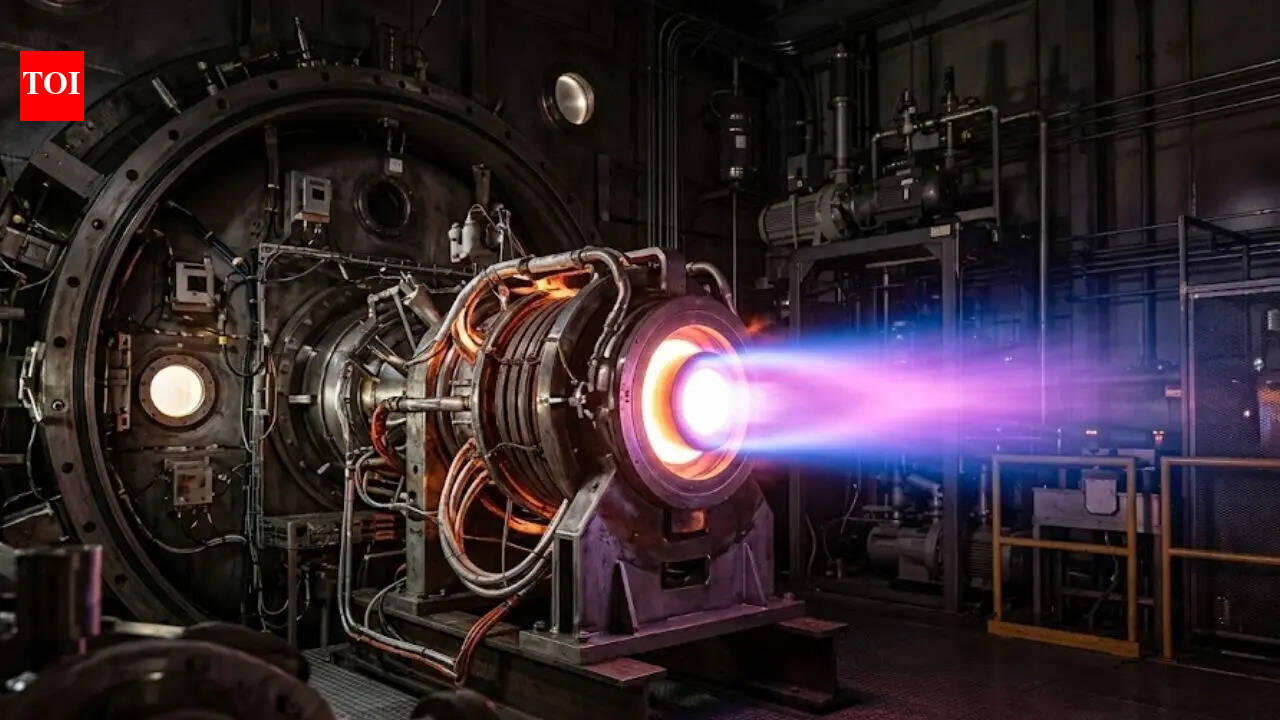
# NASA's Revolutionary Plasma Engine: A Game Changer for Mars Travel
## Introduction
In a groundbreaking development for the future of space exploration, NASA's Jet Propulsion Laboratory (JPL) has successfully tested a cutting-edge plasma engine that holds the potential to drastically shorten travel time to Mars. The new engine, powered by lithium and designed to utilize magnetoplasmadynamic (MPD) propulsion, promises to transform interplanetary travel as we know it. This innovation could pave the way for more efficient missions to the Red Planet, enabling astronauts and robotic missions to reach their destination faster than ever before. In this article, we will explore the implications of this new technology, how it works, and what it means for the future of human space exploration.
## Understanding Magnetoplasmadynamic Propulsion
Magnetoplasmadynamic propulsion is a form of electric propulsion that uses magnetic fields and plasma to generate thrust. Unlike traditional chemical rockets, which rely on burning fuel to create thrust, MPD engines utilize electrically charged gas (plasma) accelerated by magnetic fields. This method allows for more efficient travel over long distances, making it particularly well-suited for missions to Mars.
The recent test conducted by NASA involved a lithium-fed MPD engine, which is designed to be both powerful and lightweight. Lithium is an attractive propellant due to its high energy density and abundance, making it a viable option for future missions. By harnessing the unique properties of lithium and plasma, NASA aims to overcome some of the challenges associated with deep-space travel.
## The Significance of Faster Travel to Mars
Reducing travel time to Mars is not just a matter of convenience; it has profound implications for human and robotic exploration. Currently, a journey to Mars can take anywhere from six to nine months, depending on the alignment of Earth and Mars in their respective orbits. This lengthy travel time poses challenges for astronauts, including exposure to cosmic radiation, muscle atrophy, and psychological stress.
By utilizing a plasma engine, NASA could potentially cut that travel time in half. A shorter journey means less exposure to the harsh environment of space, allowing astronauts to arrive at their destination in better physical and mental health. Furthermore, a faster trip could enable more frequent missions to Mars, accelerating our understanding of the planet and increasing the likelihood of future colonization efforts.
## The Technology Behind the Lithium-Fed Plasma Engine
The lithium-fed MPD engine developed by NASA represents a significant advancement in propulsion technology. The engine works by ionizing lithium to create plasma, which is then accelerated by magnetic fields to produce thrust. This process is not only more efficient than traditional propulsion methods, but also offers the potential for a higher specific impulse, meaning it can produce more thrust with less fuel.
One of the key advantages of this technology is its scalability. The engine can be adjusted to provide varying levels of thrust, making it suitable for different mission profiles. Whether launching a small satellite or carrying crewed spacecraft to Mars, the lithium-fed MPD engine can be tailored to meet specific mission needs.
## Testing and Development Milestones
The recent successful test at NASA's JPL marks a major milestone in the development of this innovative propulsion system. Engineers conducted a series of tests to evaluate the performance of the engine under various conditions. The results were promising, with the engine demonstrating stability, efficiency, and the ability to produce significant thrust.
As NASA moves forward with this technology, further testing and refinement will be necessary to ensure its reliability for future missions. The agency is committed to a rigorous testing schedule to address any potential challenges and optimize the engine's performance. Continuous advancements in materials science and engineering will also play a crucial role in enhancing the engine's capabilities.
## Collaborations and Future Missions
NASA's success with the lithium-fed plasma engine is the result of collaborative efforts among various teams and organizations. The development process incorporates insights from experts in different fields, including engineering, materials science, and astrophysics. This interdisciplinary approach not only fosters innovation but also ensures that the technology is thoroughly vetted before being deployed in space missions.
Looking ahead, NASA has ambitious plans for the future of interplanetary travel. The agency envisions a series of missions to Mars that will not only explore the planet's surface but also establish a sustainable human presence. The successful implementation of the plasma engine could play a pivotal role in these missions, enabling astronauts to conduct scientific research, search for signs of past life, and eventually pave the way for colonization.
## The Broader Implications for Space Exploration
The development of the lithium-fed plasma engine is not just a leap forward for Mars travel; it has far-reaching implications for space exploration as a whole. As humanity looks to the stars, the ability to travel more efficiently and effectively between celestial bodies will be crucial. This technology could also be applied to missions targeting other destinations in the solar system, such as asteroids, the Moon, and beyond.
Moreover, advancements in propulsion technology have the potential to revolutionize satellite deployment and maintenance. By utilizing electric propulsion systems, satellites can be placed in orbit more efficiently and with greater precision. This could lead to improved communication systems, enhanced Earth observation capabilities, and a better understanding of our planet's climate and environmental changes.
## Conclusion
NASA's successful testing of a lithium-fed plasma engine marks a significant milestone in the agency's ongoing quest to explore Mars and beyond. The potential to reduce travel time to the Red Planet could not only enhance the safety and well-being of astronauts but also facilitate more frequent and ambitious missions. As NASA continues to refine this technology, the implications for space exploration are vast, with possibilities extending far beyond Mars.
With each advancement in propulsion technology, we move closer to realizing the dream of a sustainable human presence on Mars and the broader solar system. As we stand on the brink of a new era in space exploration, NASA's innovations serve as a beacon of hope and inspiration for future generations of explorers. Whether it's unlocking the mysteries of our neighboring planets or laying the groundwork for interstellar travel, the journey has only just begun.