
Spatially resolved single-cell analyses of human meningioma identify novel cell states influencing tumor microenvironment and progression
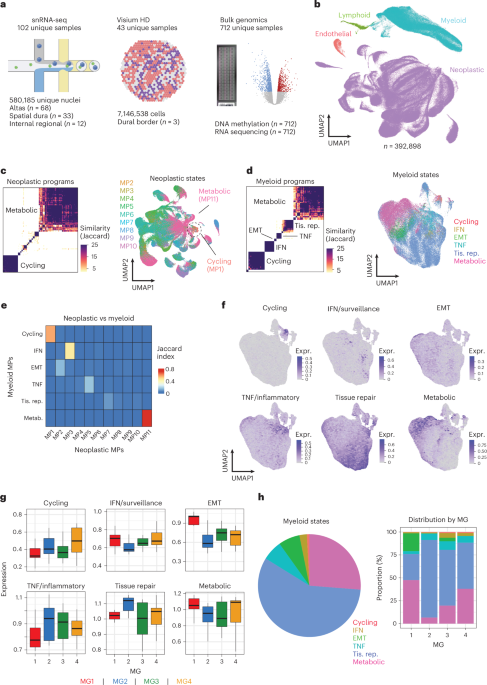
Recent advances in our understanding of the molecular landscape of meningioma have generated new insights into the biology and heterogeneity of this disease, with demonstrated clinical value. However, there remains a need to understand tumor-intrinsic heterogeneity at single-cell resolution to inform potential therapeutic avenues. In this study, we examined the breadth of cell types and states in meningioma using a large cohort profiled with single-nuclear RNA sequencing and high-resolution spatial transcriptomics, as well as bulk DNA methylation and RNA sequencing (n = 712), bulk proteomics (n = 88) and plasma methylation (n = 59). We demonstrated that myeloid cell states differ across molecular groups of meningiomas and evolve meaningfully from dura to tumor. Myeloid cell states were also associated with unique myeloid–neoplastic interactions and neoplastic gene programs, suggesting a role in shaping the microenvironment. Finally, multiple non-neoplastic cell states refined outcome prediction beyond molecular group, suggesting a role in meningioma progression. This paper presents a sizeable single-cell multi-omic analysis of meningiomas comprising more than seven million cells. The results highlight tumor-intrinsic heterogeneity within both malignant and stromal compartments.