
'Taiwan question': Trump stays quiet, Xi warns of 'clashes and conflicts if not handled properly'
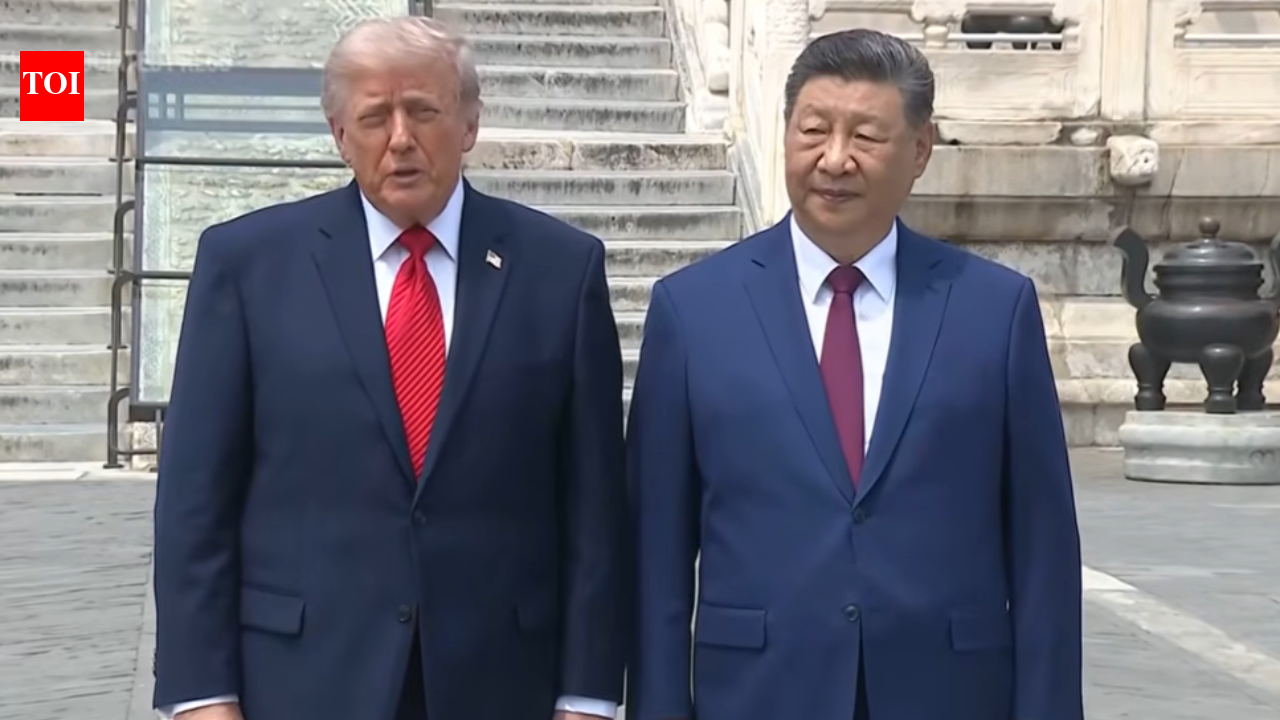
# Tensions Rise Over Taiwan: Xi Jinping's Warning and Trump's Silence
The ongoing tensions between China and the United States have once again flared up, with Taiwan at the center of the geopolitical storm. As the island nation finds itself caught in the crosshairs of superpower rivalry, the stakes have never been higher. Recent statements from Chinese President Xi Jinping have underscored the potential for “clashes and conflicts” if the Taiwan situation is not handled with care. Meanwhile, former President Donald Trump has notably refrained from commenting on the matter, leaving many to speculate about the implications of his silence.
## The Taiwan Dilemma: A Historical Context
Taiwan has long been a point of contention between China and the United States. Following the Chinese Civil War, the island became a stronghold for the Nationalist government, which fled to Taiwan after being defeated by the Communists in 1949. Since then, China has viewed Taiwan as a breakaway province, while Taiwan operates as a self-governing entity with its own democratic government.
In recent years, the issue of Taiwan's sovereignty has escalated, particularly as China has increased its military presence in the region. The United States, on the other hand, has maintained a policy of strategic ambiguity, supporting Taiwan's self-defense capabilities while officially recognizing the One China policy.
## Xi Jinping’s Stark Warning
During a recent address, President Xi Jinping issued a stark warning regarding the Taiwan question. He emphasized that if the situation is not managed properly, it could lead to serious consequences, including "clashes and even conflicts." This statement highlights Beijing's growing impatience with what it perceives as foreign interference in its internal affairs, particularly from the United States.
Xi's comments come at a time when the Chinese military has been conducting unprecedented exercises near Taiwan, which many analysts interpret as a show of force. The drills have raised alarms in Washington and among Taiwan's leadership, who are acutely aware of the potential for military confrontation.
## The U.S. Response: A Missing Voice
While Xi has been vocal about his concerns regarding Taiwan, former President Donald Trump's silence on the issue has raised eyebrows. Trump, who has previously taken a hardline stance on China and expressed strong support for Taiwan during his presidency, has yet to make a statement regarding the recent developments.
This absence of commentary is particularly notable given the current geopolitical climate. Trump's silence has led to speculation about his views on the Taiwan issue and what direction he might take if he were to run for office again in 2024. Some analysts suggest that this could indicate a shift in focus for Trump, or perhaps a desire to avoid alienating potential voters who may support a more conciliatory approach to China.
## The Implications for U.S.-China Relations
The Taiwan question is not just a bilateral issue; it has broader implications for international relations. The U.S.-China relationship, already strained by trade disputes and human rights concerns, could face further deterioration if tensions escalate over Taiwan.
The Biden administration has reaffirmed its commitment to Taiwan, emphasizing that the U.S. will continue to support the island's self-defense capabilities. However, this support must be balanced with diplomatic efforts to prevent conflict. The administration's approach has been to engage in high-level dialogues with Beijing while also maintaining a strong military presence in the Indo-Pacific region.
## The Role of Allies in the Taiwan Equation
As tensions rise, the role of U.S. allies in the region becomes increasingly crucial. Countries like Japan, Australia, and South Korea share concerns about China's assertiveness and have expressed support for Taiwan's right to self-determination. Joint military exercises and increased defense cooperation among these nations signal a united front against potential aggression from China.
Moreover, the Quadrilateral Security Dialogue (Quad), which includes the U.S., Japan, India, and Australia, has been actively discussing strategies to ensure a free and open Indo-Pacific. The Quad's commitment to regional stability could play a significant role in deterring any aggressive moves by China concerning Taiwan.
## The Economic Dimensions of the Taiwan Dispute
Beyond military concerns, the Taiwan issue also carries significant economic implications. Taiwan is a global leader in semiconductor manufacturing, a critical component in today's technology-driven world. Any conflict over Taiwan could disrupt supply chains and have far-reaching effects on the global economy.
The United States and its allies have recognized the importance of securing semiconductor supply chains, especially in light of the ongoing global chip shortage. As a result, there is a concerted effort to diversify sources and reduce dependency on Taiwan, while also enhancing domestic production capabilities.
## The Future of Taiwan: Navigating Uncertainty
The future of Taiwan remains uncertain as tensions continue to simmer. On one hand, Taiwan's government, led by President Tsai Ing-wen, has shown resilience and a commitment to maintaining its sovereignty. On the other hand, the growing assertiveness of China poses a significant threat to the island's stability.
As the international community watches closely, the actions of both the U.S. and China will be critical in shaping the outcome of this ongoing crisis. The need for diplomacy cannot be overstated, as both sides must find a way to navigate the complexities of the Taiwan issue without escalating into military confrontation.
## Conclusion: A Call for Prudence and Dialogue
The Taiwan question stands as a pivotal challenge in the relationship between China and the United States. With Xi Jinping's warning of potential conflicts and Trump's silence, the situation remains precarious. As tensions rise, it is essential for both nations to engage in open dialogue and consider the broader implications of their actions.
The stakes are high, not only for Taiwan but for regional and global stability. The international community must advocate for a peaceful resolution, emphasizing the importance of diplomacy over military confrontation. In an increasingly interconnected world, the need for cooperation and understanding has never been more critical. The future of Taiwan, and indeed the future of U.S.-China relations, depends on the choices made in the coming months.