
The SCHENGEN pathway regulates lignin barrier formation via the receptor-like cytoplasmic kinase BIK1 in plant immunity
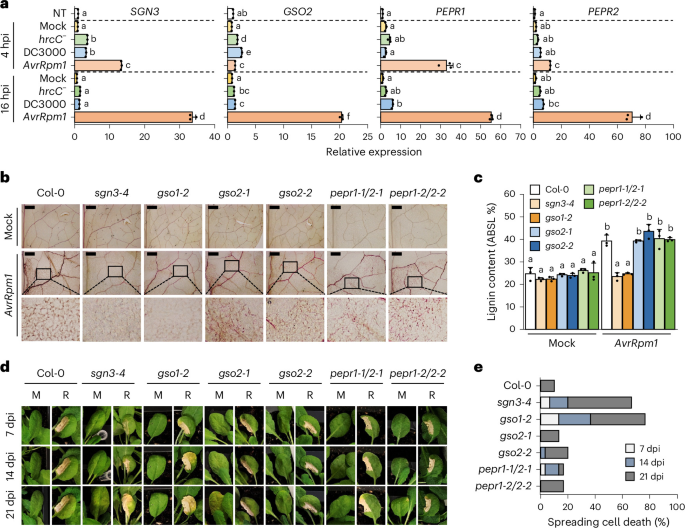
Lignin deposition is a hallmark of plant immunity, forming a physical barrier that restricts pathogen spread and confines hypersensitive cell death. However, how immune signalling triggers this barrier remains unclear. Here we show that in Arabidopsis thaliana, the SGN3 (also referred to as GSO1) receptor kinase and CIF peptides, known for their roles in Casparian strip surveillance in the root endodermis, also function in leaves during effector-triggered immunity to control lignin barrier formation and disease resistance. Mechanistically, SGN3 preferentially uses BAK1 as its coreceptor and directly activates the receptor-like cytoplasmic kinase BIK1, which functions as the primary downstream signalling component during immune-associated lignification. Genetic and molecular analyses further reveal that NLR-driven CIF–SGN3–BIK1 signalling cooperates with pattern recognition receptor pathways to promote reactive oxygen species production and lignin polymerization during effector-triggered immunity. These findings uncover a previously unrecognized immune function of SGN components and establish a signalling module linking pathogen recognition to lignin-based barrier formation. This study reveals that the SCHENGEN pathway, known for forming a diffusion barrier in roots, also functions in plant immunity by linking pathogen recognition to protective lignin barrier formation and disease resistance.