
Thymulin restrains age-associated myeloid inflammation and enhances cancer immunotherapy
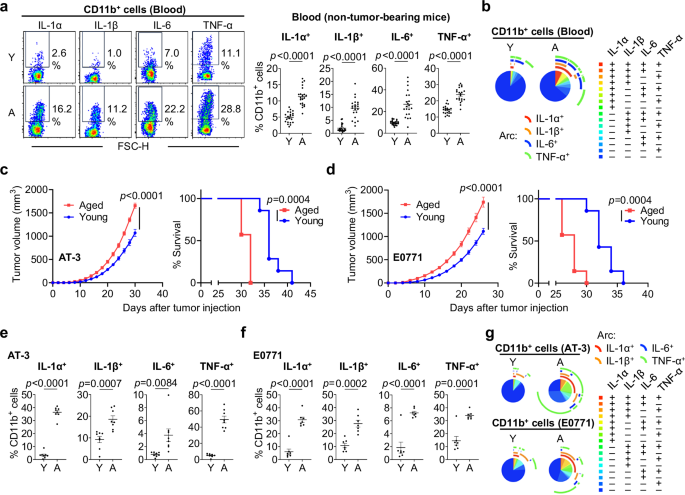
Chronic inflammation increases with age and contributes to cancer progression and therapeutic resistance, yet the mechanisms underlying this process remain incompletely understood. Here, we identify an increased frequency of pro-inflammatory myeloid cells in aged mice and humans, characterized by elevated production of IL-1α, IL-1β, IL-6, and TNF-α. These cells are enriched in the breast tumor microenvironment and are associated with accelerated tumor progression. Using heterochronic parabiosis and bone marrow chimeras, we show that age-associated myeloid cell inflammatory activation is suppressed by non-bone marrow-derived circulating factors present in young hosts. Integrative analyses identify thymulin, a thymus-derived peptide that declines with age, as a mediator that suppresses pro-inflammatory cytokine production by inhibiting NF-κB signaling. Furthermore, thymulin enhances antitumor T-cell immunity, improves tumor control and survival, and sensitizes tumors to anti-PD-L1 therapy in an age-dependent manner. Together, these findings uncover a thymus–myeloid cell regulatory axis linking aging, inflammation, and cancer immunity, and suggest thymulin as a potential strategy to improve cancer immunotherapy in older individuals. Aging-derived chronic inflammation may drive cancer progression via systemic tumor-associated myeloid cell activation. This study identifies young mice thymulin as suppressing chronic pro-tumorigenic inflammatory features in aged mice.