
RBI Repo Rate 2026 : Stability, Growth, and What It Means For India
The Reserve Bank of India (RBI) makes important decisions about monetary policy that affect the economy of the whole country. The RBI's decisions about interest rates, especially the repo rate, are still very important to policymakers, investors, businesses, and borrowers in 2026. The RBI's approach this year strikes a careful balance between stability and growth, as global uncertainties rise and domestic growth stays strong.
What is the Repo Rate, and why does it matter?
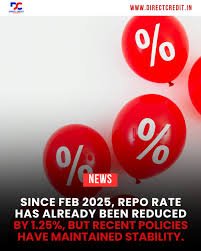
The repo rate is the interest rate that the Reserve Bank of India (RBI) charges commercial banks when they borrow money. It has a direct effect on the amount of money in the economy, as well as on interest rates, EMIs, and fixed deposit returns. The repo rate affects how much it costs to borrow money and how people spend their money in different areas when the RBI changes it. As of early 2026, the repo rate is still 5.25%. It hasn't changed since December 2025, when it was cut by 125 basis points over the course of the year. This steady rate has made things more predictable for both investors and borrowers.
The RBI's plan for 2026 is to choose stability over aggression.
In February 2026, the RBI's Monetary Policy Committee (MPC) met and decided to keep the repo rate at 5.25%. This means that it is still neutral. The central bank can raise or lower interest rates, depending on how the economy does in the future. The choice shows that the RBI isn't in a hurry to speed up or slow down the economy. Here are the reasons for this approach:• Inflation rates that are stable and mostly in the RBI's comfort zone• Strong economic growth momentum, thanks to demand from within the country• Things that are uncertain around the world, like geopolitical tensions and prices that change quickly
What to Look Forward to in April 2026
Everyone is waiting for the RBI's latest policy announcement as of April 2026. Many market expectations and economist surveys say that the RBI will probably keep interest rates the same again. A survey by Reuters found that most economists believe the repo rate will stay at 5.25%. This shows that they are being careful because of the rising risks of inflation caused by things like oil prices going up around the world. RBIThe RBI is also expected to:• Don't take sides; instead, focus on managing liquidity rather than changes in rates.• Before making any big decisions, pay close attention to inflation.
Things That Were Important to the RBI's Decision
1. Inflation trends
Inflation has stayed pretty low, but tensions in the Middle East and other places have made the price of crude oil go up. This could make imported goods more expensive, which would make the RBI more careful.
2. The economy is getting bigger
India's economy is still growing steadily, and the GDP is expected to grow by 6 to 7 percent. There are strong trends in spending and investing that support keeping rates where they are.
3. The world is full of uncertainty
The Indian rupee has lost value because of wars and unstable currencies in other parts of the world. The RBI is putting the stability of the economy ahead of big changes in interest rates.
4. What makes liquidity possible
Short-term interest rates have stayed low because the banking system has more money than it needs right now. The RBI might use liquidity tools instead of changing policy rates.
What it means for people and businesses in general
For People Who Take Out Loans
The repo rate hasn't changed, so the EMIs on your loans should stay the same. This is good for people who have personal loans and home loans because they won't have to pay more right away.
For People Who Want to Put Money In
For a while, fixed deposit (FD) rates may not change. But if inflation goes up, banks might slowly raise the interest rates on deposits.
For Businesses
Businesses can better plan their investments and growth strategies when interest rates are stable because they know how much it will cost to borrow money.
How the Market Feels and Acts
The financial markets have already taken into account a decision to keep things the same most of the time. Equity markets have been cautiously hopeful. Banking and cars are two examples of sectors that are sensitive to interest rates. They have reacted positively to expectations of stable rates. Investors are also keeping an eye on inflation trends and things that happen around the world that could change how policies are made in the future.
What Will Happen Next:
The RBI's policy direction will depend on how the economy changes in 2026. Some important choices are:• Rate cuts: If growth slows down a lot or inflation stays low• Rate hikes: If inflation goes up a lot because of things that happen in other parts of the world• Continued pause: This is the most likely thing to happen in the near future. Many economists think that the RBI might keep rates steady for most of 2026 so that the effects of previous rate cuts can fully show up in the economy.
Final Thoughts
The RBI's choice about interest rates in 2026 is part of a plan to keep things stable but not too risky. The central bank is keeping the repo rate at 5.25% and staying neutral while dealing with a complicated economy with steady growth at home and uncertain conditions around the world. The main goal for now is still to find a balance between keeping inflation in check and encouraging economic growth. This will help India's economy stay strong even when things go wrong outside of India. The RBI will keep using data to make decisions throughout the year. This means that every meeting about policy is very important for the country's financial future.