U.S. Consumer Confidence Falls Despite Strong Jobs Growth
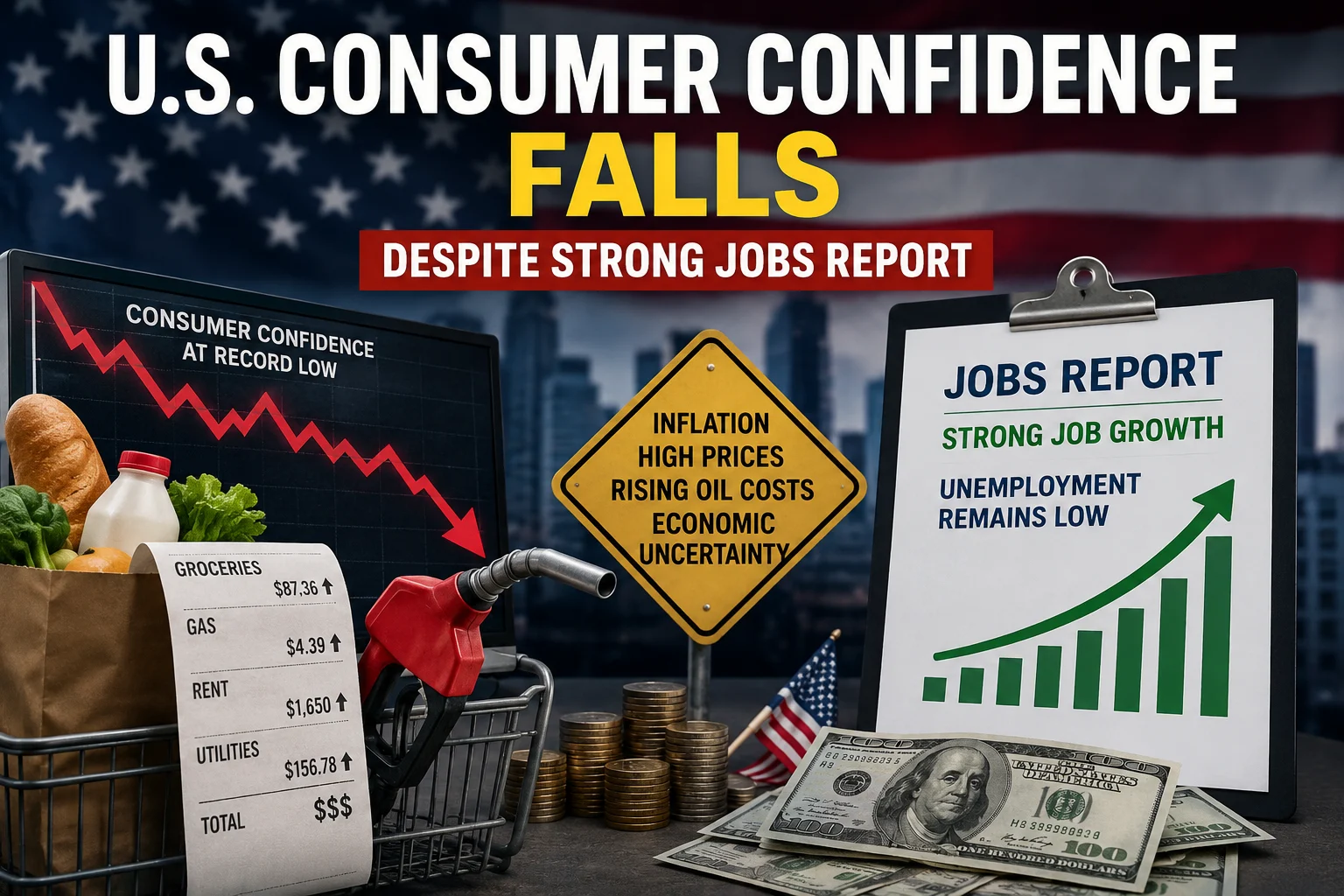
U.S. Consumer Confidence Falls Despite Strong Jobs Growth
The United States economy is currently facing a complicated moment as strong employment numbers continue to clash with weakening consumer confidence. While businesses across the country are still hiring workers and unemployment remains relatively low, millions of Americans are becoming increasingly worried about inflation, expensive living costs, and uncertainty about the future.
Recent economic reports showed that consumer confidence in the U.S. has dropped sharply, highlighting growing anxiety among households. Economists consider consumer confidence one of the most important indicators because it reflects how people feel about their personal finances and the overall economy. When confidence falls, consumers usually become more careful with spending, which can eventually slow economic growth.
Inflation Continues to Pressure American Families
One of the main reasons behind declining confidence is the continued pressure of inflation. Although inflation has cooled compared to previous peaks, prices for essential goods and services remain significantly higher than they were a few years ago. Americans are still paying more for groceries, transportation, healthcare, rent, and insurance.
For many middle-class households, rising costs are becoming difficult to manage. Families are spending a larger portion of their income on basic necessities, leaving less money available for savings, entertainment, or discretionary purchases.
Fuel Prices and Oil Market Concerns
Fuel prices have also become a major concern for consumers and businesses alike. Rising oil prices caused by geopolitical tensions and supply concerns are increasing transportation costs around the world. As shipping and production expenses rise, businesses often pass those costs on to customers.
Economists say higher fuel costs affect nearly every part of the economy. From airline tickets to grocery deliveries, increased energy prices continue adding pressure to already strained household budgets.
Strong Jobs Report Surprises Analysts
Despite growing consumer concerns, the latest U.S. jobs report delivered stronger-than-expected results. Employers added more jobs than analysts predicted, while unemployment remained near historically low levels. Industries such as healthcare, hospitality, and technology continued hiring workers, showing that many businesses still remain confident about future growth.
The labor market’s resilience has surprised economists who expected higher interest rates to slow hiring activity more aggressively. Over the past few years, the Federal Reserve has increased interest rates multiple times in an effort to reduce inflation.
Why Americans Still Feel Financially Stressed
Even though employment remains stable, many Americans say their incomes are no longer keeping pace with rising living costs. Wage growth has improved in several sectors, but inflation continues reducing purchasing power for millions of workers.
As a result, consumers are becoming more cautious with spending decisions. Retailers have already reported weaker demand for non-essential products as shoppers focus more on necessities such as food, fuel, and housing.
Housing Affordability Remains a Challenge
Housing costs are another major source of concern across the United States. Mortgage rates remain significantly higher than they were during the pandemic-era housing boom, making homeownership difficult for many Americans.
Rental prices in major cities also remain elevated, placing additional pressure on younger families and first-time home buyers. Financial experts believe housing affordability will continue to influence consumer confidence throughout the year.
Federal Reserve and Interest Rate Decisions
Investors and economists are closely watching the Federal Reserve for signals about future interest rate decisions. Policymakers are attempting to balance inflation control with economic growth while avoiding a major slowdown.
If inflation continues to decline steadily, analysts believe the Federal Reserve could eventually pause or reduce interest rates. However, persistent inflation may force officials to maintain tighter financial conditions for longer.
Global Uncertainty Adds More Pressure
International events are also contributing to economic uncertainty. Geopolitical conflicts, energy market volatility, and supply chain disruptions continue affecting global trade and investment. Since the U.S. economy is heavily connected to international markets, problems overseas can quickly impact American consumers and businesses.
Small businesses are especially vulnerable during uncertain economic periods. Many companies are facing higher operating costs, increased borrowing expenses, and weaker consumer demand.
Can the U.S. Economy Avoid Recession?
Some economists believe the U.S. economy could still avoid a recession if job growth remains stable and inflation continues slowing over the coming months. Others warn that weakening consumer confidence may eventually reduce spending enough to create slower economic growth.
For now, the economy continues showing mixed signals. Strong employment data suggests resilience, while declining confidence highlights growing financial stress among consumers.
The coming months will likely play a critical role in determining the direction of the American economy. Inflation trends, fuel prices, consumer spending, and Federal Reserve policies will all influence whether confidence begins recovering or continues weakening.
Frequently Asked Questions (FAQs)
Why is consumer confidence falling in the United States?
Consumer confidence is falling mainly because of inflation, expensive fuel prices, rising housing costs, and overall economic uncertainty.
Is the U.S. labor market still strong?
Yes, the latest jobs report showed stronger-than-expected hiring and stable unemployment levels.
How do oil prices affect inflation?
Higher oil prices increase transportation and production costs, which often lead to higher prices for consumers.
Could the U.S. economy enter a recession?
Economists say recession risks remain, but strong employment growth could help the economy avoid a major downturn.
Consumer confidence in the United States has fallen sharply despite strong job growth. Rising inflation, fuel prices, and high living costs continue to pressure American households and businesses.