
China's new lunar mission to conduct environment and resource surveys of Moon’s south pole
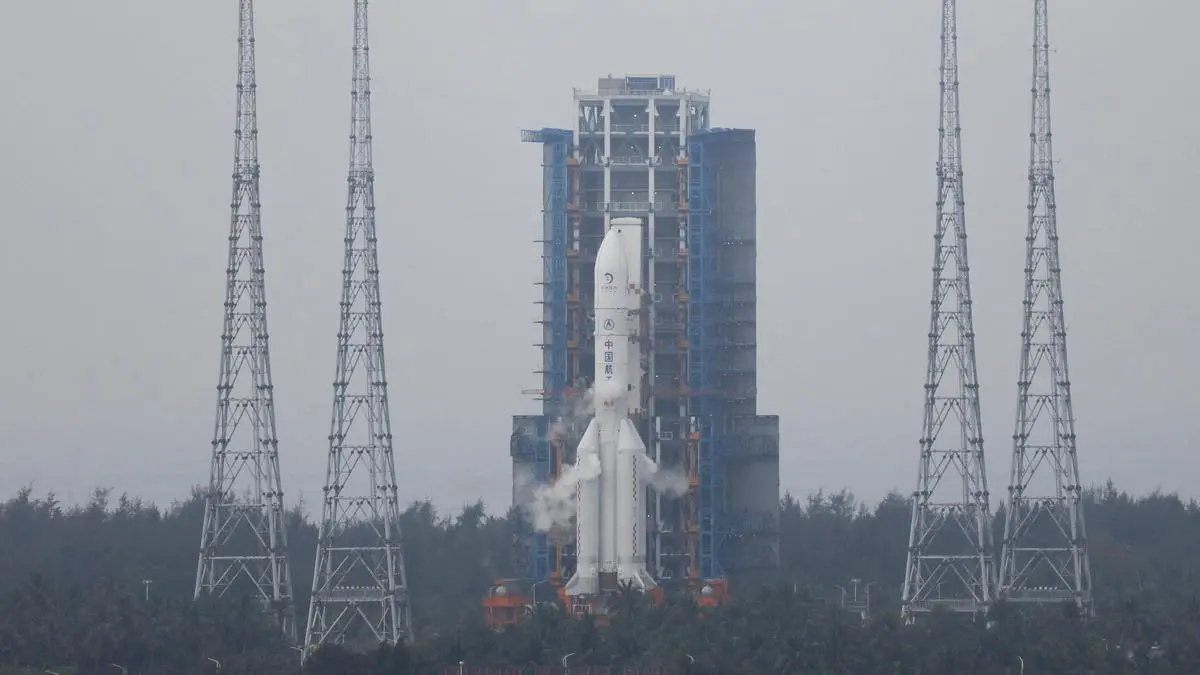
# China's Chang'e-7 Mission: A Pioneering Leap Towards Lunar Exploration
In a landmark stride for lunar exploration, China has announced its Chang'e-7 mission, aimed at conducting comprehensive surveys of the Moon's south pole. As the global interest in the Moon intensifies, this mission represents a significant step in understanding the lunar environment and identifying potential resources for future exploration. With its ambitious objectives, Chang'e-7 is set to unlock new insights into the Moon's geology, resources, and the potential establishment of a future research base.
## The Significance of the Moon's South Pole
The Moon's south pole has garnered attention from scientists and space agencies around the world due to its unique characteristics and potential resources. Unlike other regions of the Moon, the south pole is believed to harbor water ice in permanently shadowed craters. This ice is of immense interest, not only for its implications for future human habitation but also as a resource for fuel and life support systems in prolonged lunar missions.
Understanding Water Ice on the Moon
Water ice on the Moon could revolutionize our approach to lunar exploration. The presence of water opens up possibilities for sustainable living and resource utilization beyond Earth. For astronauts, water is essential for drinking, but it can also be split into hydrogen and oxygen, serving as rocket fuel. The Chang'e-7 mission aims to map these water ice deposits in detail, providing invaluable data that could inform future missions and the establishment of a lunar base.
## Objectives of the Chang'e-7 Mission
The Chang'e-7 mission is not only focused on the search for water; it encompasses a broader range of scientific objectives. Here are some of the key goals of this ambitious mission:
1. Detailed Geological Mapping
One of the primary objectives of the Chang'e-7 mission is to create detailed geological maps of the Moon's south pole. By analyzing the composition and structure of the lunar surface, scientists can gain insights into the Moon's geological history and evolution. This data will be crucial for understanding the processes that have shaped the Moon over billions of years.
2. Resource Assessment
In addition to water ice, the Chang'e-7 mission aims to assess other valuable resources present in the lunar south pole region. This includes identifying mineral deposits that could be utilized for construction and manufacturing in future lunar missions. By mapping these resources, China hopes to lay the groundwork for sustainable lunar exploration.
3. Investigating the Lunar Environment
Understanding the lunar environment is vital for the safety and success of future manned missions. The Chang'e-7 mission will measure factors such as radiation levels, temperature variations, and the composition of the lunar regolith. This data will help scientists develop strategies to protect astronauts and equipment from the harsh conditions on the Moon.
4. Testing New Technologies
The Chang'e-7 mission will also serve as a platform for testing new technologies that could be used in future lunar missions. This includes advanced landing techniques, robotic systems, and scientific instruments. By refining these technologies on the Moon, China aims to enhance its capabilities for future exploration.
## The Technological Marvels of Chang'e-7
China's Chang'e-7 mission will utilize cutting-edge technology to achieve its ambitious goals. The mission will include an orbiter, a lander, and a rover, each equipped with advanced scientific instruments.
The Orbiter
The orbiter will play a crucial role in mapping the lunar surface from above. Equipped with high-resolution cameras and spectrometers, it will capture detailed images and analyze the lunar surface's composition. This data will be vital for identifying areas of interest for the lander and rover.
The Lander
The lander is designed for a soft landing on the Moon's surface. It will carry scientific instruments capable of conducting in-situ analysis of the lunar soil and environment. The lander's precision landing capabilities will be crucial for ensuring the success of the mission.
The Rover
The rover will be equipped with a suite of advanced sensors and instruments to explore the lunar terrain. It will analyze soil samples, search for water ice, and conduct experiments to better understand the Moon's geology. The rover's mobility will allow it to traverse various terrains and collect data from multiple locations.
## International Implications of Chang'e-7
As China forges ahead with its lunar ambitions, the Chang'e-7 mission has significant implications for international space exploration. The mission underscores the growing competition among nations to establish a presence on the Moon and utilize its resources.
Collaboration vs. Competition
While the Chang'e-7 mission highlights China's capabilities in space exploration, it also raises questions about international collaboration in lunar exploration. As countries aim to establish a foothold on the Moon, the potential for collaboration in scientific research and resource sharing becomes increasingly important.
The Future of Lunar Exploration
The Chang'e-7 mission is part of a broader strategy by China to become a leader in space exploration. With plans for a lunar research station and further missions to Mars, China's commitment to advancing its space program is clear. The success of the Chang'e-7 mission will not only enhance China's reputation but also set the stage for future international collaborations in space.
## Conclusion: A Pioneering Step for Humanity
China's Chang'e-7 mission represents an exciting chapter in the story of lunar exploration. By focusing on the Moon's south pole, this mission aims to uncover vital information about water resources, geological history, and the potential for human habitation. As we stand on the brink of a new era in space exploration, the Chang'e-7 mission serves as a reminder of the boundless possibilities that lie ahead.
The insights gained from this mission will not only benefit China but will also contribute to humanity's understanding of the Moon and its resources. As nations around the world look to the Moon as a stepping stone for future exploration, the Chang'e-7 mission is poised to play a pivotal role in shaping our journey into the cosmos. The quest for knowledge, sustainability, and the exploration of new frontiers continues, and with it, the promise of a brighter future for all of humanity.